
Every athletic department has something lurking in its books. It doesn't appear in the audit. It doesn't show up in CFO reports. It's not in the donor database, the season ticket file, the social analytics dashboard, or the NIL collective ledger.
It's loyalty — and at every school, it is almost certainly worth more than any single line item that is being measured.
Loyalty shows up everywhere and nowhere at once. It's the gear in closets across pulled out to be worn by three generations of fans while sitting on the couch for the big game. It's donations large and small, year after year. It's the cousin who never went to the school but watches every game because the whole family does. It's the baby photos in a cute school headband and colors! It's the bios that list a school nickname before a job title. It's twenty thousand engaged comments on a fan board most ADs have never visited. It is the most powerful force in college sports, and historically the hardest to manage and measure.
Until now.
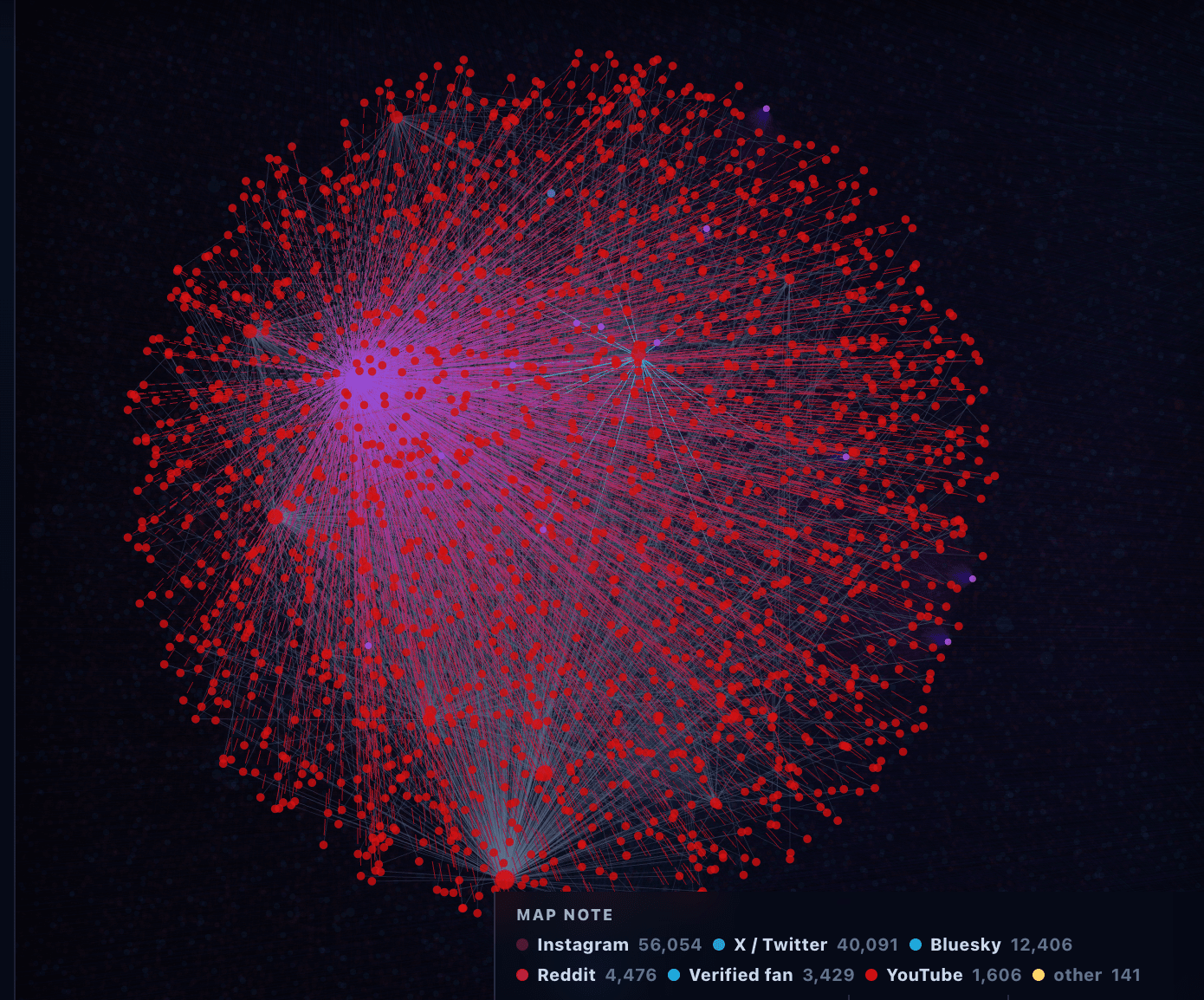
Today, Waypoint Network is announcing Fan Atlas™, a next generational marketing tech platform that identifies, visualizes, and helps activate the network of loyalty, influence, and interconnection running through every fan base. "This is a game changer," said one marketing lead at a D1 school after seeing an early version. "We've always known these fans were out there posting content, bantering in fan boards, planning trips together, posting selfies. We've never had a way to see them all at once — let alone do anything about it."
What makes college different
Fan Atlas exists because college sports is structurally different from every other sports environment — and fundamentally different from every other consumer category, none of which inspire face painting!
"College loyalty can't always be explained. But it explains a lot," said Scott Stevens, co-founder and CMO of Waypoint. "Online signals of fandom are so strong if you know where to look. Baby photos in their alma mater's colors. Gator flags at their wedding reception. School information in their social media bios. Time spent on fan boards and banter that goes on for decades. There's nothing quite like it. And we’ve found it."
The implication is very important and something most programs haven't fully internalized: in college athletics, fans leave a richer digital trail of devotion than in almost any other vertical. Pro teams have casual switchers and bandwagon dynamics. Brands have transactional buyers. College fan bases have people whose identity is fused with the institution for life — and they advertise that fusion constantly, on every platform, for free, with no one cataloging or rarely rewarding it.
Yes, the signals are loud, but the infrastructure to read them has not existed. That is what Fan Atlas changes.
Why we built it
"As we began working with university marketing teams, we realized fans and influencers are scattered everywhere — Instagram accounts, fan boards, Reddit threads, podcasts, university social channels," said Matt Sanders, CEO and co-founder. "Such a vibrant crowd, but tough to see and reach. So we began to consolidate and orchestrate these fan bases into Fan Atlas using next-generation tools, technology, and insights."
The result is a supra-network — visibility across all the fragmented places fans live and interact, unified into a single picture of a program's loyalty economy. West Virginia University and its Gold and Blue Network became one of Waypoint's anchor partners when it launched mountaineer.travel. Its Fan Atlas grows daily with each click, each comment, each signal and now numbers in the hundreds of thousands of individual fans, ranked and scored by influence, mapped across platforms, clustered into the communities they actually inhabit. Really influential nodes on their atlas include some that most would predict like The Smoking Musket fan board, several notable athletes, university official social channels, but there are dozens of other influential paths in the atlas not visible before now.
A short word on why this works
Ok, here’s some more technical speak. The economic logic underneath Fan Atlas isn't new. It draws on six decades of research in identity economics, social exchange theory, and the psychology of motivation. What that research says, in plain terms: for the most loyal members of any community, recognition, access, status, connection and authentic gifts will outperform cash and other motivations for participation.
Athletic departments have always known about this deep seated loyalty intuitively. It's why donor stewardship works. It's why a hand-signed note from an AD lands differently than a generic email. What hasn't existed is a system to extend that same logic — recognize the people who matter; reward them with something money can't buy — to the thousands of fans whose relationship capital who amplify the program every day without ever being acknowledged.
Universities have development offices that cultivate financial capital. They have multimedia rights holders that monetize broadcast audiences. They now have NIL structures that compensate athletes. They have never had a system for reaching the fans whose accumulated social capital, properly engaged with the right offerings, could rival what's coming in through major-gift channels.
What this unlocks
Fan Atlas does three things no existing tool does at once:
- It identifies the critical nodes (individuals) in a fan network — the individual contributors with clout, bloggers, podcasters, content creators, family hubs, and celebrity and other community voices whose reach amplifies the program every week.
- It visualizes how those nodes connect en vivo — to each other, to the institution, to athletes, to commercial behaviors and preferences like tickets, fan gear, university sponsored events, and travel.
- And it activates them to support and get the word out about university branded travel portals and other new initiatives intended to bolster the program.
"We consider this more of a supra-network," Sanders said. "Visibility into fan bases where they actually interact. We are very excited to put this new approach to work in marketing Waypoint's university-branded travel portals for revenue generation, and believe it will become a powerful new tool for athletic departments to inspire fans to join other new initiatives."
The first deployment is growing daily at West Virginia, with BYU close behind. Several other schools will go live shortly and a notable athletic conference will be the first to create visibility and marketing strategies across its individual school audiences via Fan Atlas.
The schools that learn first how to see their fan base as the asset it actually is — and reward the people inside it with the recognition they have always deserved — will be the ones that lead the next era of college athletics marketing.
The atlas is being drawn. The map is the asset.